
Independent Living With Support (VICA) is the program whose main objective is to strengthen the adaptive skills that allow young people and adults with Down syndrome to recognize and accept themselves as individuals transitioning into youth and adulthood—ultimately achieving supported independent living.
This program is designed for individuals aged 14 to 30. Participants are grouped primarily by age and then subdivided according to skill level.
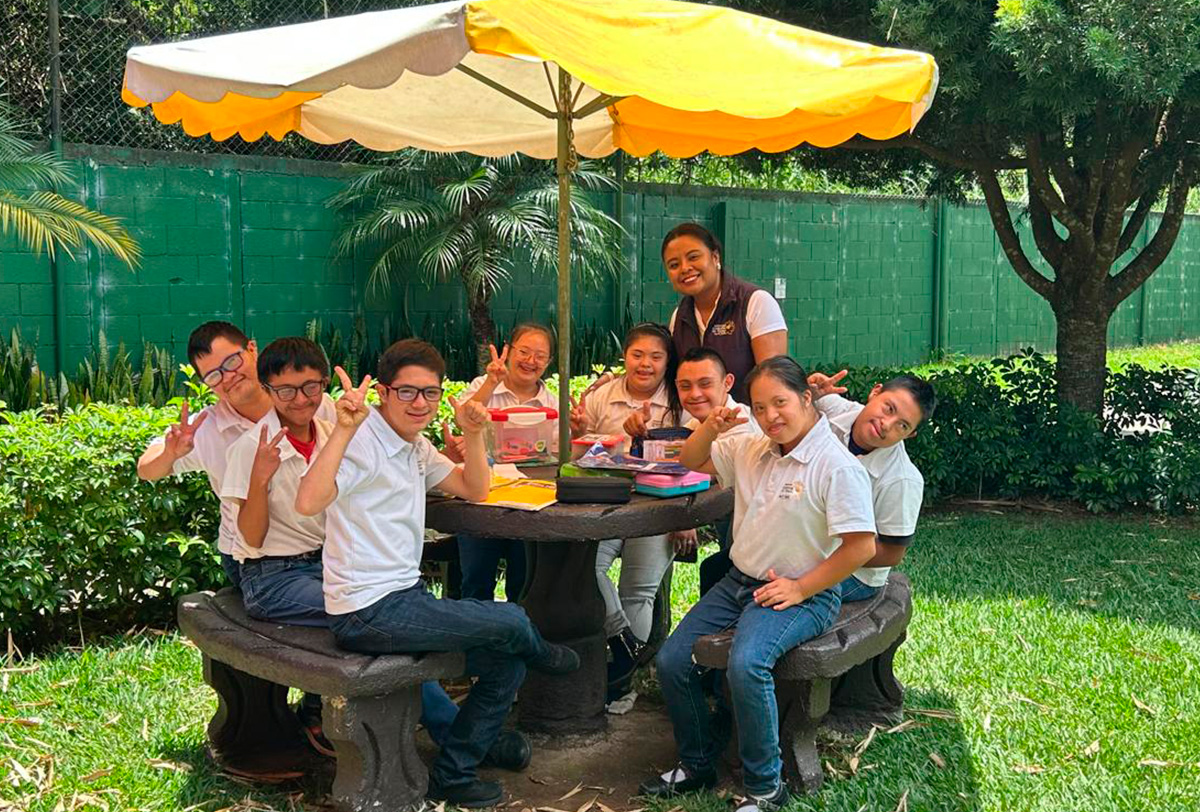
Promote social and verbal and non-verbal communication skills.
Train in various technical fields and areas of specialization.
Support the process of physical, emotional and behavioral changes related to age, involving the family.
Guide family members through the different stages of the life of a person with Down Syndrome.
Consolidate identity and self-esteem based on your reality.
The general weekly activities are divided into: days dedicated to academic activities, and days focused on vocational and occupational training workshops. Based on this structure, VICA operates under two main pillars: Academic and Occupational.
ACADEMIC PILLAR:
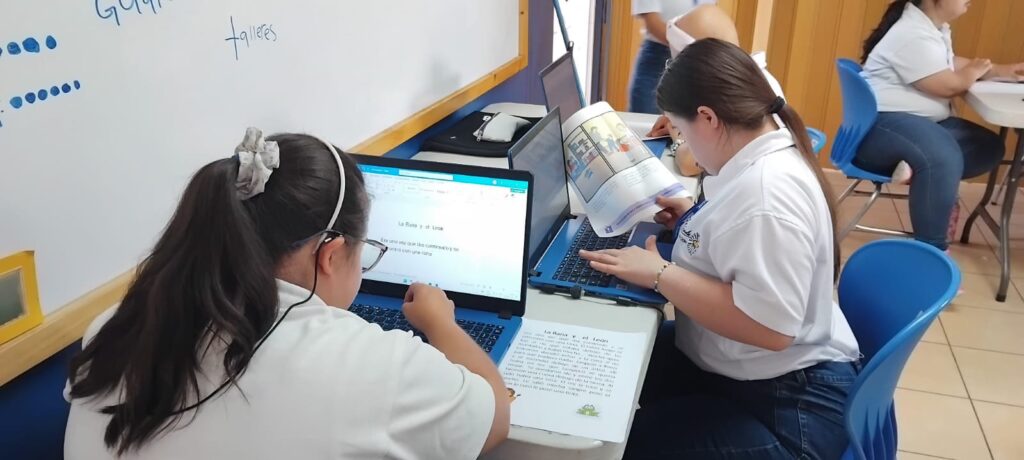
Academic Days are those in which students receive instruction in the following areas: Mathematics, Communication and Language, Autonomy, Emotional Development, Cognitive Stimulation, and Readiness Skills. These activities are organized through weekly work guides. During these sessions, young people and adults are divided into groups according to their skill level.
OCCUPATIONAL PILLAR:
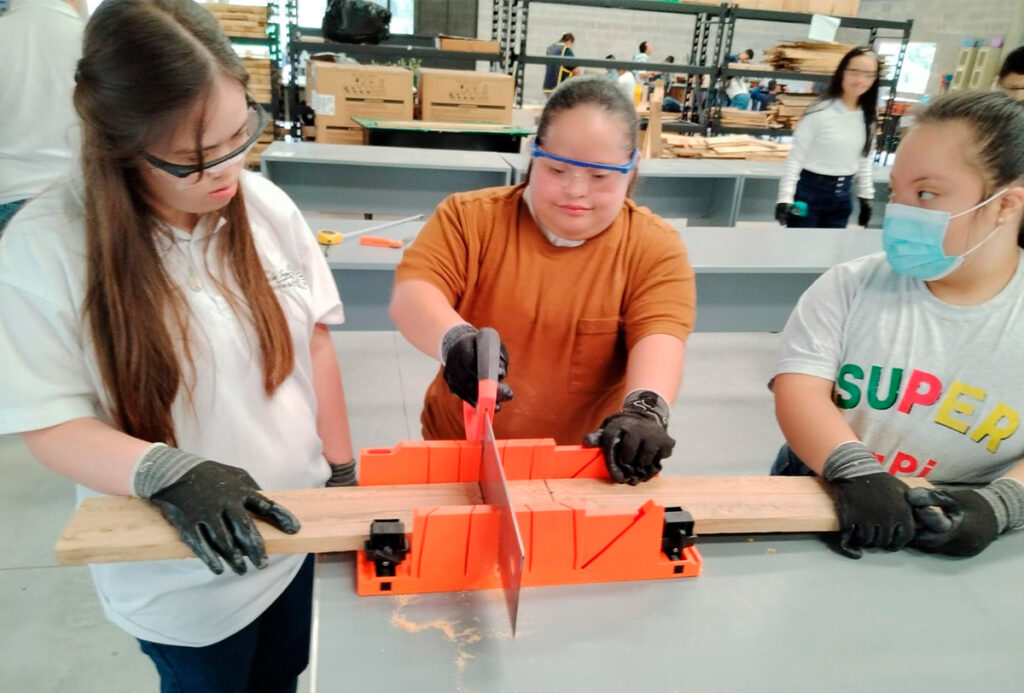
This pillar provides training in various technical fields through workshops in: Bakery, Cooking, Office Skills, Multiservices, Packaging, Jewelry Making, Technology (TEC), Industrial Skills, Gardening, and Sewing. To strengthen autonomy and independence, students are given the opportunity at the beginning of each cycle to choose the workshops in which they wish to train. This selection process is supervised and supported by the professional team and families.
Each workshop includes a syllabus divided by weeks, providing both an introductory explanation—known as the workshop induction—and hands-on practice in each area. Through these two pillars, the VICA Program promotes social and emotional skills, verbal and non-verbal communication abilities, autonomy and independence, and provides support through physical, emotional, and behavioral changes. Families receive guidance as needed, fostering the development of identity and self-esteem.