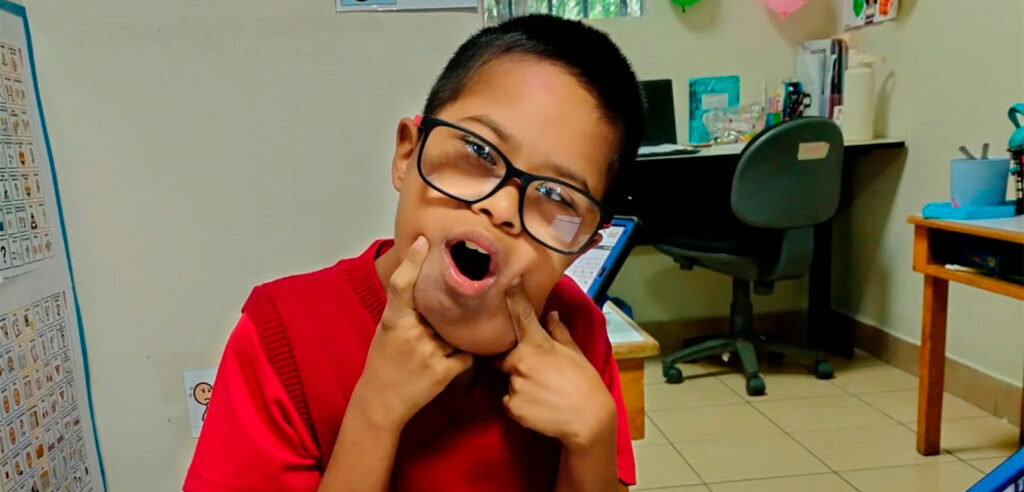
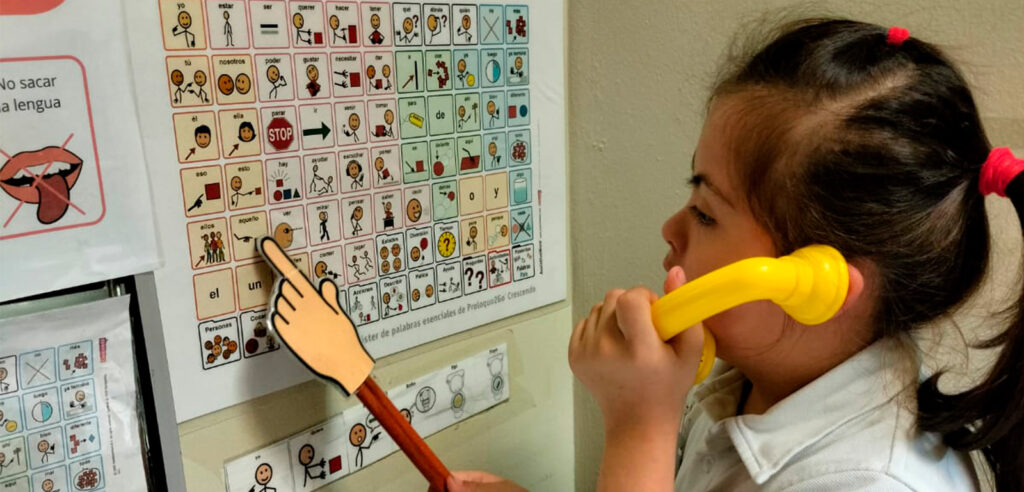
To achieve communicative competences according to the age and condition of each of the people with Down syndrome who attend the programs of the Margarita Tejada Foundation. To achieve communicative competences according to the age and condition of each of the people with Down syndrome who benefit from the programs of the Margarita Tejada Foundation.
To assess, diagnose and address the communication difficulties experienced by students/employees of the foundation.
Define the communication method that best suits each student/worker according to their individual characteristics.
Actively involve the family, company, student’s school, and worker to foster effective communication.
To offer advice to parents and teachers on everything related to the development and learning of language in their children, students.
Promoting respect for the communication rights of people with Down syndrome.
To promote research that contributes to the care provided in this program.
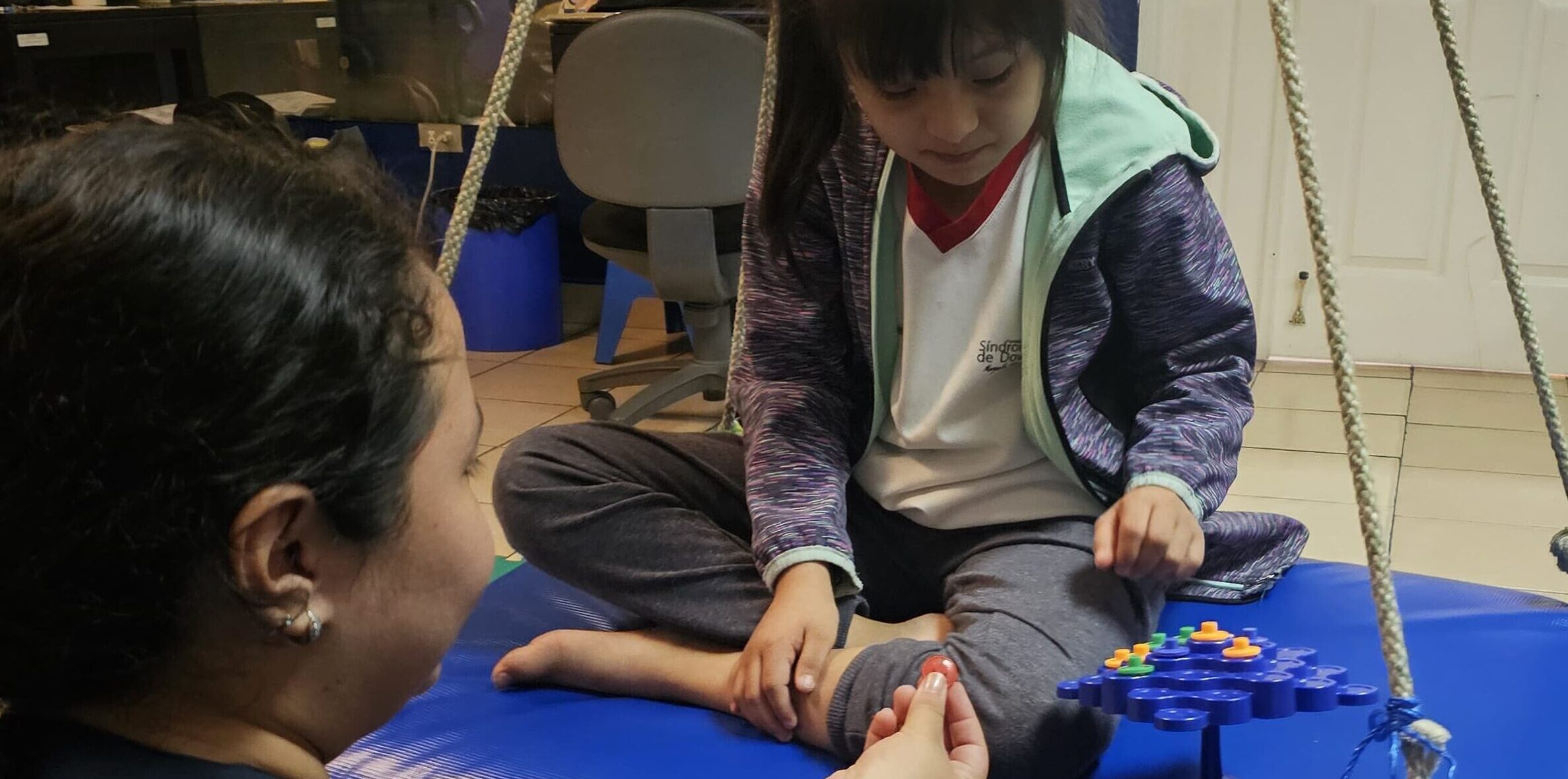
The types of care vary depending on the program, the person’s age, and their individual needs. These may include 40-minute individual therapy sessions once a week, group language workshops, and so on.
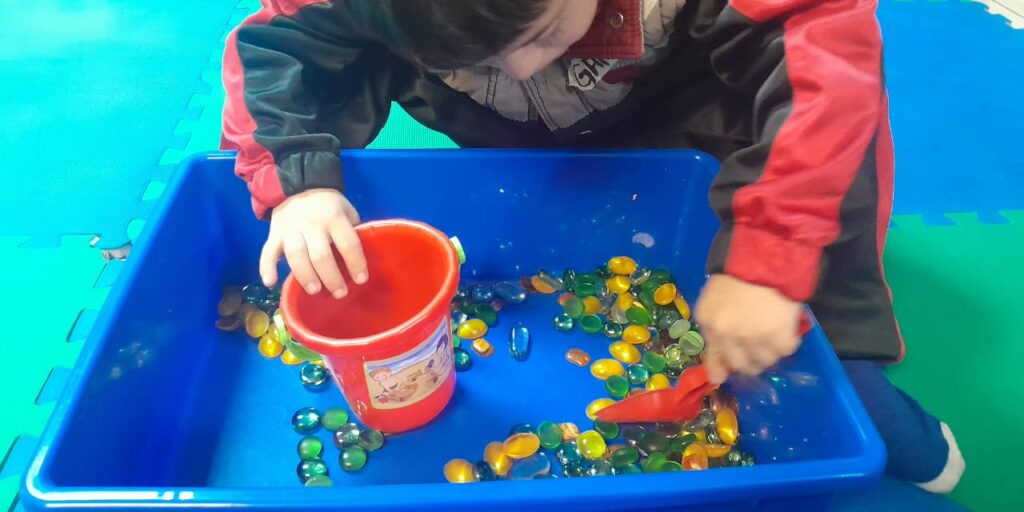
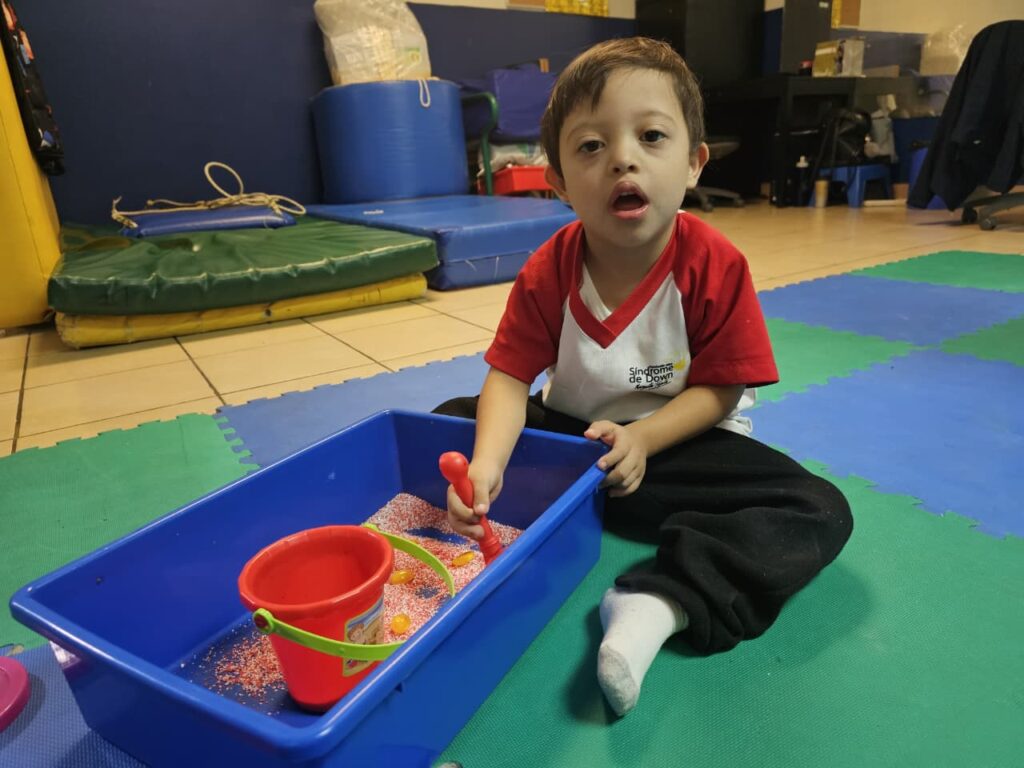
The way our brain receives, organizes, interprets, and responds to environmental stimuli received through the senses is an extremely complex neurological process. It is fundamental for effective learning, regulating our social behaviors, and interacting with our peers. When this process does not occur properly, various difficulties in our adaptive responses may become evident. Therefore, Sensory Therapy plays an indispensable role in the comprehensive development of individuals with Down syndrome who require it, as determined by a prior evaluation.

Our goal is to provide strategies for children with Down syndrome between the ages of 3 and 12, using a preventative and/or rehabilitative approach tailored to their individual needs.
Specific Objectives:
To provide the necessary tools to organize the information they receive through their senses, improving their interaction with the environment.
To use play-based learning strategies for meaningful learning.
Based on classroom observations made by the teacher regarding the student’s various reactions and responses to environmental stimuli, or the presence of behaviors that interfere with the learning process, the student is referred for evaluation by the program professional.
Depending on the results of the evaluation and observations by the occupational therapist, the student is admitted to the program, where their individualized intervention plan is implemented once a week in a one-hour session.